It’s no secret that the most important thing about major gift fundraising is relationship building. No matter whether you’re talking about raising money from individuals, companies, or foundations, the key is building honest, authentic relationships to bring about positive change. [Read more…]
Going beyond capacity ratings
In case you missed it (and click here if you did), last week on this blog Melissa Bank Stepno shared her knowledge and some wise words from her colleague, David Lamb, on capacity ratings.
Capacity ratings are an important factor in every major gift effort. They will not be perfect, (let me repeat that – they will never be perfect) and capacity rating are just one of several data points we use, but they are an important tool to help us rank our very top prospects.
One of the common misconceptions of capacity codes is that some folks new to the profession might think that capacity means “How much will they give us?” It doesn’t.
A capacity rating says, “what is this person’s total ‘wallet’ for philanthropic giving in a year to every organization they support?” [Read more…]
The Artful Science of Capacity Ratings
It is a great pleasure to welcome Melissa Bank Stepno as this week’s guest writer on The Intelligent Edge. I’ve long admired Melissa’s gift in seeing the big picture in prospect development and her ability to eloquently communicate and train on its finer details. So when she and I were chatting between sessions at the recent NEDRA conference, I grabbed the opportunity to ask her to share her thoughts here on capacity ratings, which has been a hot topic lately on the prospect research discussion forum, prspct-l.
How much can they give? What should we ask for? How rich is she? What’s his net worth?
Such short questions. Such common questions. Such important questions. [Read more…]
Capacity Ratings, 747s, and Volvos
Mark Noll, AVP of Research and Development Services at the University of Rhode Island started a conversation earlier this week in an article titled “Why Capacity Ratings are Bunk and What You Can Do About It.” In the post, Noll discusses the difficulties of assigning an accurate capacity rating to prospects. There’s just too much we prospect researchers – and frontline fundraisers – will never know about the totality of someone’s assets and their liabilities. Noll provides a solid lesson on what actually goes into a capacity rating. And what is logically missing. [Read more…]
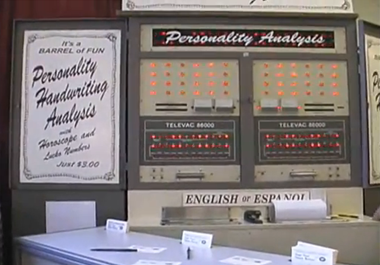
The Fair, the handwriting analysis booth, and relationship management
When I was a kid, we went to the Bloomsburg Fair every year, rain or shine. The Fair has been a magical place for generations of kids (no matter their age) and a place of hope as well. It’s been held in late September since 1855, and hundreds of thousands of people come every year for miles around, making it the biggest fair in the Commonwealth of Pennsylvania.
It’s an agricultural/exhibit fair, and my mom tells me that during the Great Depression, many folks relied (some fairly desperately) on winning cash prizes for things they grew, bottled, jarred, knitted, sewed and showed at the Fair. Slightly more recently, the Bloomsburg Fair was the place where Taylor Swift made her concert debut. So I suppose it’s always been a place where dreams (and money) are made.
Every year as we [Read more…]
Ratings: What happens when you drop a prospect status ball
Keeping track of one or two major gift prospects isn’t too difficult, but when there are scores of donors you need a system to make sure that no one gets forgotten.
Imagine your horror to discover that a loyal donor [Read more…]
Ratings – Measuring inclination
What you need to know about ratings
Capacity Ratings – get informed for better results
In my early days as a prospect researcher, I used to be a “Just the facts, ma’am” kind of researcher and report writer. A “here’s what I can see. I have no idea what the rest looks like so I can’t even guess for you” kind of gal. I was so afraid to be wrong.
Except I already was wrong.
Ratings – The Myth of 5% Over Five
We’ve been dead wrong in our calculations of gift potential for major donors.
We don’t have the right information. And we’re using what we do have the wrong way.
Let me set the stage: normally when we’re calculating a major donor’s capacity to give we look at their total visible assets and calculate that they will give 5% of that over five years to charity. Where does that ratio come from? The IRS, the Chronicle of Philanthropy and Giving USA are the three big resources for philanthropic giving information in the US.
The 5% figure we’ve been using isn’t real