Real estate is a major factor in determining a prospect’s capacity. And since many of our high net worth prospects have homes in both the city and the country, it is important to know where how to confirm ownership and estimate value. This presentation, by HBG Senior Researchers Kelly Labrecque and Heather Willis, is divided into two parts: Part 1) Researching New York City Property Assets and Part 2) Valuing Farms and Ranches in the West.
Search Results for: real estate
The Unease of the One Percent
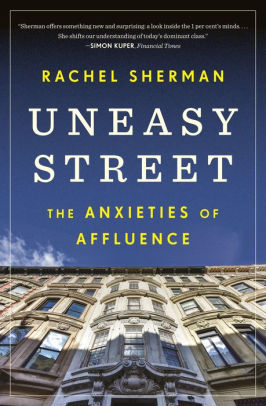 We talk about “the 1 percent” a lot in our line of work. Yesterday, the HBG Book Club met to talk about chapter one of Uneasy Street; The Anxieties of Affluence by sociologist Rachel Sherman, and what spurred most of our conversation was the ambivalence high net worth people had toward their wealth.
In the book, Sherman interviewed wealthy Manhattan-ites to learn their attitudes towards their wealth and what they felt it means to be considered wealthy. She recognized a distinct pattern over time, and shares two distinct categories she observed depending on how people spoke about their wealth: upwardly- and downwardly-oriented attitudes.
The “downward-oriented” wealthy share an unease with having so many resources in a time of stark income disparity. Sherman found that this group are more likely to have inherited their wealth or have come from more modest origins. Most are not in a high-pressure earning environment. More liberal politically than the upwardly-oriented, people in this group are be more likely to mix with a more racially and income diverse group of friends. We posited that people with these attitudes might fall into the shirtsleeves-rolled-up volunteer-donor category.
The “upwardly-oriented” wealthy, she wrote, tend toward the attitude of “sure, I’m comfortable, but not like that guy. He’s really wealthy. I’m middle class compared to him.” There aren’t many inheritors in this group; they tend to be earners who make their money in finance, real estate, business, or corporate law. More conservative politically than the downwardly-oriented, their charity involvement may be less hands-on and more focused on opportunities to network with others.
As we were discussing this chapter, I was thinking about what it actually means to be a one-percenter, and if the attitudes of Manhattan one-percenters toward their money are the same as Mercer Island’s, or England’s, or if each locale’s attitude is like Darwin’s finches – unique to that island.
Naturally, I decided to do some research to see what it means to be a one-percenter elsewhere than New York City. Unsurprisingly, it really depends on your geography. Someone working in a senior leadership position in a large nonprofit in New York, Boston, or San Francisco would probably qualify as a one-percenter in Arkansas, where in 2017 the bar was set at annual income of $237,428.
Before seeing the article, I had assumed that NYC would be the top, but Connecticut actually beat out New York by a mile, $659,979 to $517,557. Even New Jersey got New York’s upper hand, at $547,737. What’s also fascinating to see in the article is that the average annual income for members of the one percent in each state is usually much, much higher than the threshold.
What we discussed in our book club was being aware of these geographic differences and, as always, understanding the context of where our prospects are in their life – living in an aspirational neighborhood with two kids in private school, or two-income, childless and nearing retirement. Taking Sherman’s observations into consideration as well – whether prospects are upwardly- or downwardly-oriented – may also provide us with help as we plan how to involve and steward major donors and volunteers.
Are you reading this book as well? I’d love to hear your thoughts in the comments.
Moving Beyond Your Comfort Zone: Sharing Knowledge
This week stepping up to the microphone is my colleague, Kelly Labrecque, who shares her personal journey from trepidation to triumph at the podium. Kelly’s article is a great reminder to all of us that by saying ‘yes’ to the things that scare us (at first!) lots of great things can happen! ~Helen
 Like many people, the thought of speaking in public scares the daylights out of me. My primary fear? The audience will laugh me off the stage, label me a fraud, and never allow me to work in research again. I know this fear may seem ridiculous to some, but for those of us new to sharing our ideas in a professional setting, the anxiety and self-doubt is real. We wonder, “What can I possibly teach a room full of seasoned researchers? What do I have to share that will be interesting and engaging to others? And honestly, will it really matter to anyone (other than me) if I don’t do it.”
Two years ago, with the encouragement of my HBG family, I decided to confront these fears by presenting at my first research conference. It was a terrifying experience made bearable only by the fact that I was lucky enough to share it with my HBG colleague, Heather Willis. I’m not sure I could have gotten through it without her. (Thanks, Willis!)
Here is what I learned from that experience and I hope that it inspires some of you to move beyond your comfort zone and share your knowledge with your peers in the research community.
Share your passion
In my opinion, the best presentations are those given by people who are not just knowledgeable, but passionate, about their work. So consider the following when choosing a presentation topic:
- What topics or trends in philanthropy make you love being a researcher? (read: What makes you “geek-out”?)
- What tips and tricks have you developed over the years that could benefit others?
- Is there a game-changing piece of advice you wish someone had shared with you as a budding researcher?
For me, deciding what to present was fairly easy. I’m fascinated by New York City real estate and it was, by far, one of the most challenging areas for me as a new researcher. As a result, I have spent a great deal of time learning all that I can – everything from navigating ACRIS to understanding current market trends. In fact, once word got around that I was a bit of an “expert” on the subject, colleagues started coming to me with their questions. That’s when I realized I had something important to share with my peers.
Know the skill level of your audience
In developing a presentation for a conference, be sure to properly gauge its level of difficulty. Will your topic be geared towards the new researcher or someone who has been in the profession for a number of years? If you decide to welcome all levels to your session, be sure to include some background basics for the newbies, as well as, some more challenging aspects for the veterans.
For my presentation, I focused on creating content that could be used by both the new and seasoned researcher in all sectors. I didn’t want to bore or overwhelm my audience. So I began by giving the key background basics of understanding the different types of real estate in Manhattan and how to verify ownership and value, then moved into the more advanced nuances of how market trends affected these values. This ultimately allowed me to engage all researchers.
Think about what YOU look for in a quality presentation
Whether you present at a regional, national, or international research conference, audience expectations shouldn’t differ much from your own. Although the sectors in which we work may vary (healthcare, higher education, arts and culture, etc.), our conference goals are the same – to learn from and connect with our peers in a supportive environment.
When outlining your talk, think about the elements you find essential in a quality presentation. Ask yourself:
- Do you prefer to feel like you are part of a conversation? Or would you prefer a step-by-step training/lecture?
- Do you prefer to see slides with less text and more images? Or vice versa?
- Does a presenter who reads from pre-written notes seem less confident in their presentation than one who speaks “off the cuff”?
Given the scope of my presentation, I decided to provide a more step-by-step training with an even mix of images and text. And since it was my first attempt, I had prepared notes that I rehearsed at least a hundred times!!
Set realistic goals for the time allotted
Conference presentations often range in length from 60-90 minutes. Plan accordingly, especially if you are splitting the session with a colleague. Here are some tips that worked for me:
- In your first few slides, inform the audience of the learning objectives and how you will handle questions (take them as they come vs. waiting until the end).
- As you prepare your presentation, be sure to stick to the outlined objectives.
- Practice the presentation repeatedly to get a good idea of how much time you will need to get through your slides.
- If working with a partner, decide how you will divide the presentation and how long each of you will need.
Heather and I were fortunate, each portion of our presentation fell together perfectly with the time. We practiced a few times together and separately to be sure that even if we got a deluge of questions, we’d be on time.
Practice, practice, practice
I can’t stress enough the importance of practicing your presentation, not just for timing, but to help you remember everything you want to say. Having prepared notes is fine, but reading from them word-for-word can easily bore your audience. Fluency of message demonstrates confidence of message.
Other ways to share
Every researcher has something important to share. You don’t have to get up in front of a hundred people for 90-minutes to make an impact. Here are some other ways to share your knowledge:
- Volunteer with your local APRA chapter.
- Split a presentation at a regional conference with a colleague.
- Present at smaller gatherings such as Regional Interest Networking Group (RINGS) or Think Tanks.
- Take part in a roundtable discussion at a regional conference.
- Write a blog post for your organization. (See what I did there?)
Say “yes” to new opportunities.
Last month, Amy Begg of Harvard University received NEDRA’s Ann Castle Award for her contributions to the research community. In her moving acceptance speech, she offered the following piece of advice:
“Say ‘yes’ to every opportunity that comes your way because you never know where that could lead you… I realize it isn’t always easy to say ‘yes’ but every time that I have, I have grown as a person. Saying ‘yes,’ has exposed me to so many wonderful opportunities in so many different directions. In fact, I have found that when I have said ‘no’ it has actually held me back.”
Let’s hear from you!
When have you moved beyond your comfort zone? If not, what’s holding you back? What advice do you have for a researcher considering presenting at his/her first conference? What are some ways, as a profession, we can further encourage people to share their knowledge?
This is a game-changer!
Is there anything more fun in fundraising intelligence than sharing resources with others? My colleague Heather Hoke shares a glimpse into one of those moments of shared excitement that sparked this article where she shares a ton of her favorite resources. ~Helen

In August, I had the opportunity to attend the APRA conference in Pittsburgh where I sat in on some informative sessions and met development researchers with years of experience and those just starting out in the profession. I also had some great conversations with other attendees, one of which led to my idea for this article. [Read more…]
A rising delta: China, women, and philanthropy
This week, my colleague Tara McMullen shares her interest in philanthropy in China, and her delight in the impact that a small but growing cohort of women change-makers are having on the philanthropic landscape in Asia. These women are diverse in their backgrounds, corporate specialties, and philanthropic priorities; their outlook is currently mainly within China but their philanthropic scope is increasingly global. How is your organization planning to involve this new generation of influential donors? ~Helen

Over the past decade, there has been a surge in charitable giving in China – a surge which appears to be a consequence of the rapid wealth creation observed in the country. Several decades of rapid economic expansion have led to explosive wealth accumulation, resulting in a record number of billionaires. As of 2018, mainland China was home to 338 billionaires (with an additional 93 in Hong Kong). The only country in the world that has more billionaires is the United States – with 680 – but the Chinese mainland had the highest number of new additions to Forbes’ 2018 billionaire list with 89 – almost twice as many as the U.S. (at 45). [Read more…]
Primary Sources
Much of the time we rely on information aggregators like Lexis Nexis or terrific lookup sources through wealth screening companies, but sometimes they misinterpret, or don’t include information from primary sources. So in this week’s article, HBG team member Angie Herrington shares some great advice to help you strategize where to find prospect information directly from primary sources. The added bonus is that many of them are free. ~Helen

“Card Catalog Sculpture” photo by Sage Ross https://bit.ly/2NLZtPl
In college, I majored in history and was required to take a class on methodology. Holding our blank index cards, our class walked to the university’s library, met with the reference librarian, and then were set free to browse… the card catalog drawers. We were there to learn about historical evidence – primary and secondary sources. [Read more…]
Apra Conference Bingo

By Edwin Torres from USA (Classic BINGO game) [CC BY 2.0 ], via Wikimedia Commons
When Research fails (& what to do about it)
 Oftentimes clients ask us to come on site for an audit of their Research department. Through the course of our conversations at almost every organization, we hear a version of this story:
An alumna of the university/donor to the museum/former grateful patient and her husband made a jaw-droppingly significant charitable gift that was in all the newspapers.
There were two problems with this:
- The gift was made across town.
- The alumna/donor/former patient hadn’t been a rated prospect.
Everybody asks: why wasn’t she on the organization’s radar? Her evident wealth should have been surfaced long before. Why hadn’t it? What was Research doing wrong? [Read more…]
Leading from behind – part 1
 Hierarchically speaking, fundraising intelligence doesn’t usually sit at the top of any nonprofit organization’s organization chart. In fact, the most junior member of the Research team usually inhabits one of the boxes at the bottom of the chart, in my ongoing study.
But I’ve also known for a while that org charts can be deceptive. It’s the culture of a place and the specific people in the boxes that are usually the drivers of who has the ‘power’ and who doesn’t. Certain people, regardless of box geography, are able to reach beyond borders. [Read more…]
Demystifying Digital Assets
This week we welcome to the Intelligent Edge HBG Senior Researcher and HBG Book Club organizer extraordinaire, Angie Stapleton. Angie brought up the idea for this article way back in January because she was so intrigued by cryptocurrencies and their impact on philanthropy, and she has been reading up (and generously sharing her knowledge with the team) since then. It’s fascinating stuff, and if you’re interested in learning more, don’t miss Angie’s webinar – details below. ~Helen
 If you’ve been reading the Intelligent Edge blog for a while, you may have heard the HBG Book Club has been on a roll! We’ve recently read The Givers by David Callahan, Capital Without Borders by Brooke Harrington, and Secrecy World by Jake Bernstein. At their core, each of these books is about the inherent relationship between wealth and power, the structures UHNWIs use to conceal wealth, and the ability of these structures to quietly shape the world we all live in. [Read more…]
- « Previous Page
- 1
- …
- 4
- 5
- 6
- 7
- 8
- …
- 11
- Next Page »

_(2).jpg)