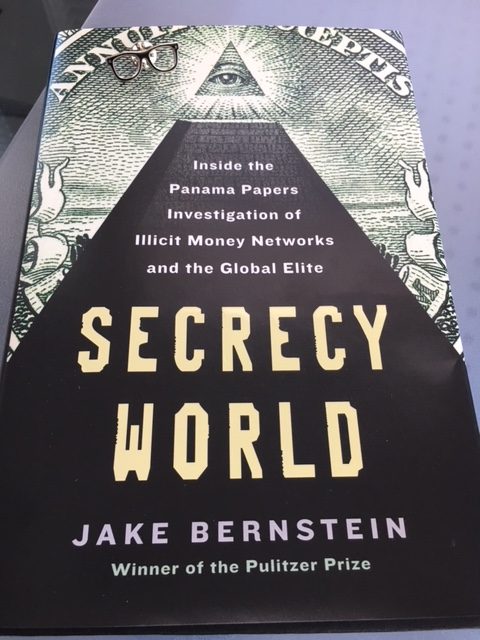
As the HBG Book Club group read about tax-free zones called freeports last week in Jake Bernstein’s page-turner, Secrecy World, it was a perfectly-timed coincidence that this fascinating Planet Money podcast came out on that very topic. [Read more…]
As the HBG Book Club group read about tax-free zones called freeports last week in Jake Bernstein’s page-turner, Secrecy World, it was a perfectly-timed coincidence that this fascinating Planet Money podcast came out on that very topic. [Read more…]
 During my time in prospect research, I’ve had to familiarize myself with ongoing trends in the philanthropic and financial world. As a former English major, I am usually much more comfortable discussing the works of Gabriel García Márquez than I am talking about SEC forms. [Read more…]
Back in the early 2000s my team and I started a database of gifts of $1 million or more by individuals or family foundations to nonprofit organizations in Massachusetts.
A million-dollar donation was still fairly noteworthy 15 years ago, but in recent years the figure to hit for exceptional giving (and website PR announcements) has crept up to $10 or even $20 million for medium-to-large organizations. [Read more…]

“Palm Beach – Flagler Museum Courtyard” Photo by Roger W via Flickr
As temperatures in the Northeast drop below 40 degrees, so begins the migration of the wealthy to their seasonal homes to wait out winter. Perhaps the most famous of these destinations is Palm Beach. Part of an 18-mile barrier island in Southeastern Florida, the town is known for its pristine beaches, mega-yacht clubs, five-star restaurants, PGA-rated golf courses, and elite equestrian facilities.
For more than a century, Palm Beach has attracted and played host to the world’s rich and famous. While there, these “snowbirds” generate millions for charity and the local economy. As a result, charitable organizations have come to recognize Palm Beach as a philanthropic hub for the cultivation and stewardship of major donors. [Read more…]

When we try to estimate a potential donor’s gift capacity, the fundraising tradition has been to use statistics from the IRS that show that, on average, Americans give around 2-5 percent of their income annually to charitable organizations.
That average is derived from people who itemized charitable deductions. Even though that’s an average, for those of us in prospect research that’s been a reliable percentage to use because, by and large, only people who benefit from itemizing actually bother to do it – and that’s wealthy people. [Read more…]

Over a year ago, an anonymous “John Doe” sent an encrypted message to a newspaper in Germany called Süddeutsche Zeitung. The conversation unfolded like this:
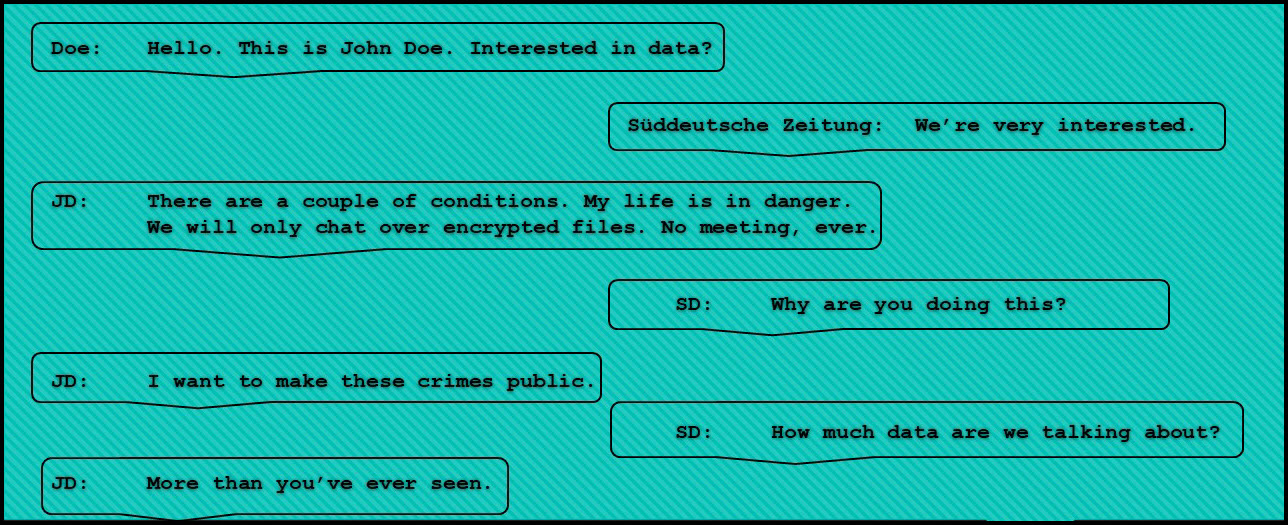
That 2014 cache of data, the equivalent to about 38,000 average-sized books, make up what became known as the Panama Papers.
It’s a trove of documents obtained from the files of a Panamanian law firm called Mossack Fonseca, which helped create shell companies and other complex financial instruments in order to assist companies and individuals to evade paying tax in their home countries.
Journalists from nearly 100 news outlets around the world in a collaboration called the International Consortium of Investigative Journalists (ICIJ) worked together nonstop for months under tight security and complete secrecy. [Read more…]
“Sculpture at end of SW Coast Path in Minehead” by Nilfanion (Own work) [CC BY-SA 3.0] via Wikimedia Commons
Oh Happy Day! You have been asked to assess the wealth of an individual and that person works for and sits on the boards of publicly-traded companies, has several real estate properties listed in their name, and a yacht-load of tangible assets. It couldn’t be easier and you display the calm of someone who has chosen an easy profession…and then you wake up. [Read more…]

“home yellow” Photo by nikcname (Own work) [CC BY-SA 4.0], via Flickr
Everyone commiserated with one HBGer’s lament that some development offices don’t include primary residence – or even any real estate – in their capacity ratings.
And I’ve heard people say on multiple occasions, “Our prospective major donor is never going to give us their house (or sell their house and give us the money), therefore we shouldn’t include it in our ratings.”
Which is true. The donor is probably never going to give your nonprofit the deed to the house they’re currently living in. (<stage whisper>: I won’t mention “planned gift” at this point, okay?)
THE THING IS…
They are also never going to give you their salary (unless they’re Chris Long), sell their yacht, their plane share, or their horses to make a donation, either. They won’t liquidate their art collection, grandma’s diamonds, or that vintage Chanel worn to last week’s benefit. The privately-held company they own will remain unsold. Likewise the stock options that don’t convert for another 5 years.
If the argument is that they’re not going to sell their house, then we should disqualify those other assets, too, right? Because they are never going to give them to you, either.
You can’t pick and choose.
If you randomly take one non-liquid asset off the table, you should take all of them. And you’d never do that, right? It would be illogical.
Figuring out someone’s gift capacity is hard enough to begin with. Purposefully handicapping yourself makes absolutely no sense to me.
I UNDERSTAND
Real estate certainly isn’t the be-all-end-all, but like all of those other assets I mentioned, if nothing else, it’s an indicator of wealth. But I think there’s much more to real estate – even primary real estate – that should be considered.
To start with, it’s solid information. We’re already operating in a realm where anything concrete is in short enough supply. So why ignore a valuable, real, solid, asset?
Also:
Real estate is a green flag. When I’m trying to find new prospects in a sea of regular donors I may skip over someone who lives in a $850,000 home in San Francisco, but I’m definitely not going to ignore a donor who has a $850,000 condo in Aspen. I’m now going to search to find a separate primary residence.
Real estate is a red flag. I was once asked to research someone who had approached an organization out of the blue offering to make a multi-million-dollar gift. What I discovered – by just looking into the prospect’s primary residence – was the first red flag that probably saved the nonprofit from months of wasted time – or worse.
Further:
100% of the world’s high net worth individuals (HNWI) own real estate. And for the more privacy-aware among them, real estate is sometimes the only hard asset we can find for them. Knowing what kind of real estate they own gives you clues into the type of personality they are, how they may want to be cultivated, and what philanthropic investments may interest them. For example:
The billionaire who owns a 20-bedroom party house on Miami Beach is very different from the billionaire living in a three-bedroom ranch in Omaha. Their real estate choices can give you clues to their lifestyle and engagement preferences. One may be a better prospect for naming opportunities with big splashy events. The other may prefer funding boots-on-the-ground clinics for vaccine delivery and student scholarships.
In addition:
We can use real estate for estimates. According to the Capgemini World Wealth Report, real estate accounted for 17% on average of a HNWI’s total assets globally last year. (In the US, it’s 11% of total assets; in Europe it’s 18%). So if all you can find is someone’s real estate holdings, you can still come up with a decent guesstimate of their total assets using that one ratio if they’re in the HNW classification.
And finally:
Real estate is critical to planned giving. There, I’ve said it, and this is really important.
Let’s say you work at a small college and you’ve got childless husband-and-wife alumni couple with a ski resort condo, a vacation home at Los Sueños in Costa Rica and a primary residence in Boston’s Back Bay. They’re consistent donors and lifelong volunteers to the college. There’s no question that the planned giving officer needs to know about them.
And in this case, it’s not only the real estate that’s interesting, but also what it tells us about these special people. Here is an active, outdoorsy couple who possibly enjoy golf, tennis and skiing. A pair that enjoys regular seasonal travel, but whose lifestyle may require extra cultivation time because they are probably not in town very often. What decisions do you need to make about how to engage them?
Look at all the information that just knowing about real estate gives us!
ONE LAST THING
In case you’re wondering, here at HBG we do include primary residence in our total visible wealth calculations on profiles.
We believe it’s a real asset. I think you should, too.
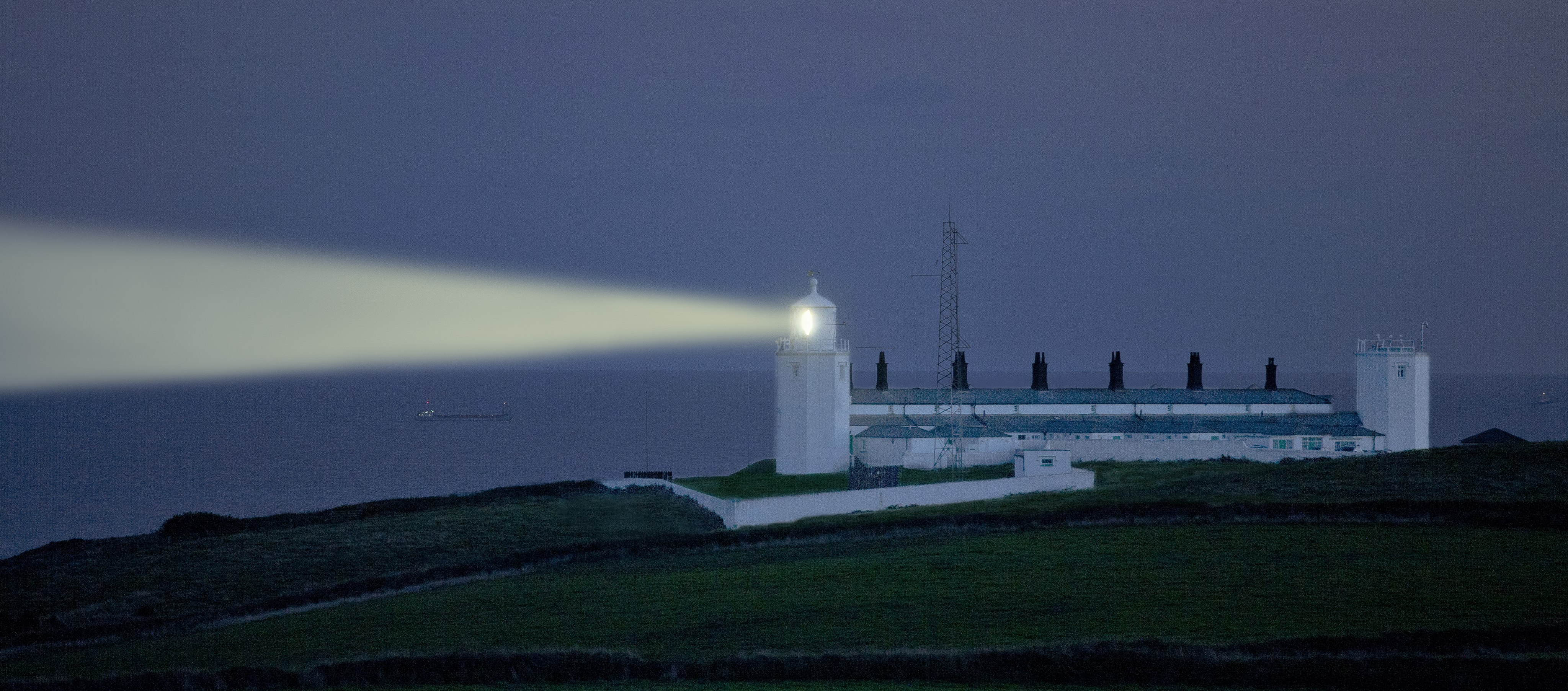
By Lizard Fine Art (Own work) [CC BY-SA 4.0 (https://creativecommons.org/licenses/by-sa/4.0)], via Wikimedia Commons
But if you think about it, that moment is really the starting line. What happens after that?
Well, an opportunity for us to have a conversation with the front line fundraiser assigned to that prospective donor, to begin with.
And most importantly, this signals the beginning – or deepening – of the relationship between your organization and the donor. The gift. Stewardship. Continuing engagement. [Read more…]

We have officially entered the fall season. School vacation is over. Our donors have returned home from their summer residences. And we are all settling back into the “normal” routine.
For many organizations, this means the start of event season. Perhaps you work in higher education and have an upcoming event for new parents, as well as Homecoming weekend. Or maybe your organization just wants to get in a few events during the fall months before the holidays start monopolizing everyone’s calendar. [Read more…]